


Hi. Big winds can surprise you. They blow hard for a few seconds then calm down. Here at WindGustNews we keep it easy. You will learn what wind gusts are, why they matter, and exactly what to do when alerts come. This guide beats old info by giving you clear facts, tables, real examples, and steps you can use today. Let’s go.
What Are Wind Gusts?
A wind gust is a quick, strong push of air. It lasts less than 20 seconds. Then it goes back to normal wind.
Normal wind is the steady speed. Weather people measure it over 1 or 2 minutes. A gust must be at least 18 mph and about 10 mph faster than that steady wind to count as a gust.
You feel it like a sudden shove. Trees shake hard. Dust flies up. It can happen any time but storms make it worse.
What Causes Wind Gusts?
Air moves because of heat and cold. Warm air rises. Cold air falls. This mix creates turbulence – like bumpy air.
Big causes:
- Hills or tall buildings block and twist the wind.
- Thunderstorms: Cold rain falls fast and pushes air down hard.
- Weather fronts: When warm and cold air meet, gusts jump up.
- Mountains: Wind squeezes through gaps and speeds up.
You see this on a windy day near a big building – one minute calm, next minute whoosh!
Wind Gusts vs Steady Wind – Why It Matters
Steady wind is the average. It tells you the main blow. Gusts are the spikes. They do most of the damage because they hit hard and fast.
Example: Steady wind 30 mph is okay for driving. But a 55 mph gust can push your car sideways. Always watch for gusts in alerts.
Types of Wind Alerts – What the Colors Mean
Weather offices send alerts so you stay safe. Here is the simple table:
| Alert Type | When It Happens | What to Do |
|---|---|---|
| Wind Advisory | Steady wind 31-39 mph OR gusts 46-57 mph | Be careful. Secure loose things. |
| High Wind Warning | Steady wind 40+ mph for 1 hour OR gusts 58+ mph | Take action now. Stay inside if possible. |
| Extreme Wind Warning | Winds 115 mph or more | Get to a strong shelter right away. |
These numbers come from the National Weather Service. In February 2026, California had High Wind Warnings with gusts to 55 mph. Parts of the Northeast saw hurricane-force gusts (74 mph+) in blizzards. Listen when you hear these.
The Beaufort Scale – See the Wind Strength Yourself
This old but useful scale tells wind power by what you see outside. No tools needed.
| Force | mph | What You See Outside |
|---|---|---|
| 0 | Less than 1 | Smoke goes straight up. Calm. |
| 2 | 4-7 | Leaves rustle. You feel wind on face. |
| 5 | 19-24 | Small trees sway. Waves on water. |
| 7 | 32-38 | Whole trees move. Hard to walk. |
| 10 | 55-63 | Trees break. Big damage starts. |
| 12 | 73+ | Hurricane force. Huge destruction. |
Use this next time it gets windy. Count the force and know if it is safe to go out.
Storm Weather Updates – What to Expect
Storms bring the strongest gusts. Thunderstorms can drop gusts of 60 mph in seconds. In February 2026, Southern California had thunderstorms with 60 mph gusts that damaged roofs.
Hurricanes have steady strong winds plus gusts even higher. Derechos are long lines of storms that push straight-line winds for hundreds of miles.
Check updates often during storms. Gusts change fast.
Read: Help Me Pack for My Trip to Kerala Next Week: Simple Local Checklist (2026)
Natural Disasters That Bring Big Gusts
- Hurricanes and tropical storms
- Tornadoes (gusts over 100 mph inside)
- Blizzards with blowing snow and wind
- Thunderstorm clusters
These events can knock out power for days. Get ready early.
Extreme Weather and Wind Gusts
Derechos hit like a wall of wind. Hail storms often come with strong gusts. Polar vortex winters bring fast winds and cold. In 2025, the Mountain West had major windstorms with gusts over 100 mph in spots.
Record-Breaking Wind Gusts
Here are the biggest ever measured:
- 253 mph – Barrow Island, Australia, 1996 (during a cyclone)
- 231 mph – Mount Washington, New Hampshire, 1934 (still the record at a staffed station)
- 144 mph – Wyoming mountains, recent winter storm
- 111 mph – North Dakota derecho in 2025
These show how powerful nature can get. Most places never see that, but even 50 mph gusts can hurt.
How Climate Change Is Changing Wind Gusts
Warmer air holds more moisture. This makes some storms stronger. Studies show climate change added 3 to 14 mph to hurricane winds in recent years. Thunderstorm gusts are getting stronger in some areas because cold air falls harder from warmer clouds.
You may see more days with strong gusts. That is why good alerts matter more now.
Your Step-by-Step Safety Plan for Wind Gusts
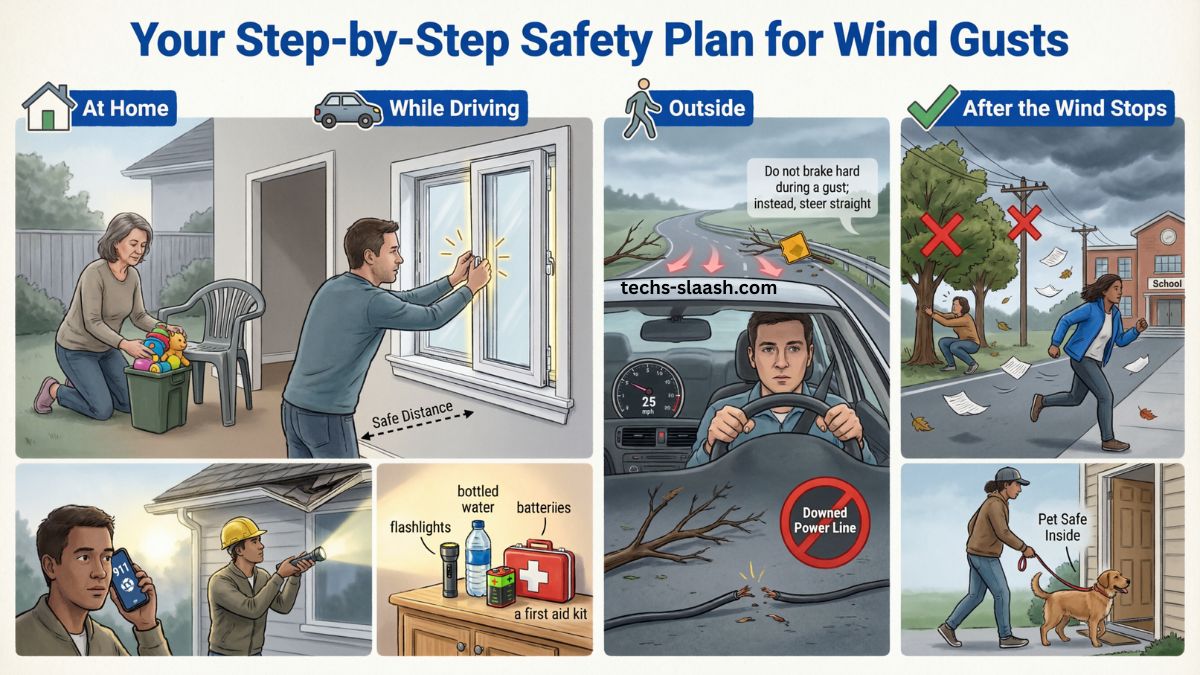
Do these things today:
At home
- Bring in chairs, trash cans, and toys from outside.
- Close all windows and doors tight.
- Stay away from big windows.
- Have flashlights and water ready if power goes out.
While driving
- Slow down a lot.
- Hold the wheel with both hands.
- Watch for branches or signs on the road.
- If a big gust hits, do not brake hard – just steer straight.
Outside
- Go inside a strong building.
- Stay away from trees and power lines.
- For pets: Bring them in early.
After the wind stops
- Check for damage but do not touch downed wires.
- Call for help if needed.
Follow these and you stay much safer.
How to Get Fresh Wind Gust News Every Day
Sign up for text alerts from your local weather office. Use phone weather apps that show gust speeds. Watch TV or radio when storms come. Check sites like this one for clear updates without extra stuff.
FAQs About Wind Gusts
What is the difference between wind and a gust? Steady wind is the average. A gust is the short, extra-strong burst.
When should I worry about gusts? If the alert says High Wind Warning or you hear 50 mph+ gusts, take action.
Can gusts happen without a storm? Yes. Near mountains or big buildings on clear days.
How fast is dangerous for driving? Gusts over 45 mph make roads tricky, especially for big trucks or RVs.
Do gusts get worse with climate change? Many studies say yes – some storms pack stronger gusts now.
What is the fastest wind ever recorded? 253 mph in Australia in 1996.
Should I buy a home weather station? Good ones show gusts right at your house. Very useful.
Where do I find alerts for my area? Your phone weather app or local news usually has them free.
Conclusion
Wind gusts can arrive suddenly and cause real trouble, from knocking down branches to making roads unsafe, but staying informed and prepared makes all the difference. With simple alerts, easy-to-read scales like Beaufort, clear safety steps, and up-to-date storm news, you now have everything needed to understand what’s happening outside and protect yourself and your family. Keep checking reliable sources, act quickly when warnings appear, and never underestimate those short, powerful bursts of wind. Stay alert, stay safe, and come back to WindGustNews anytime you need straightforward facts without the confusion.