

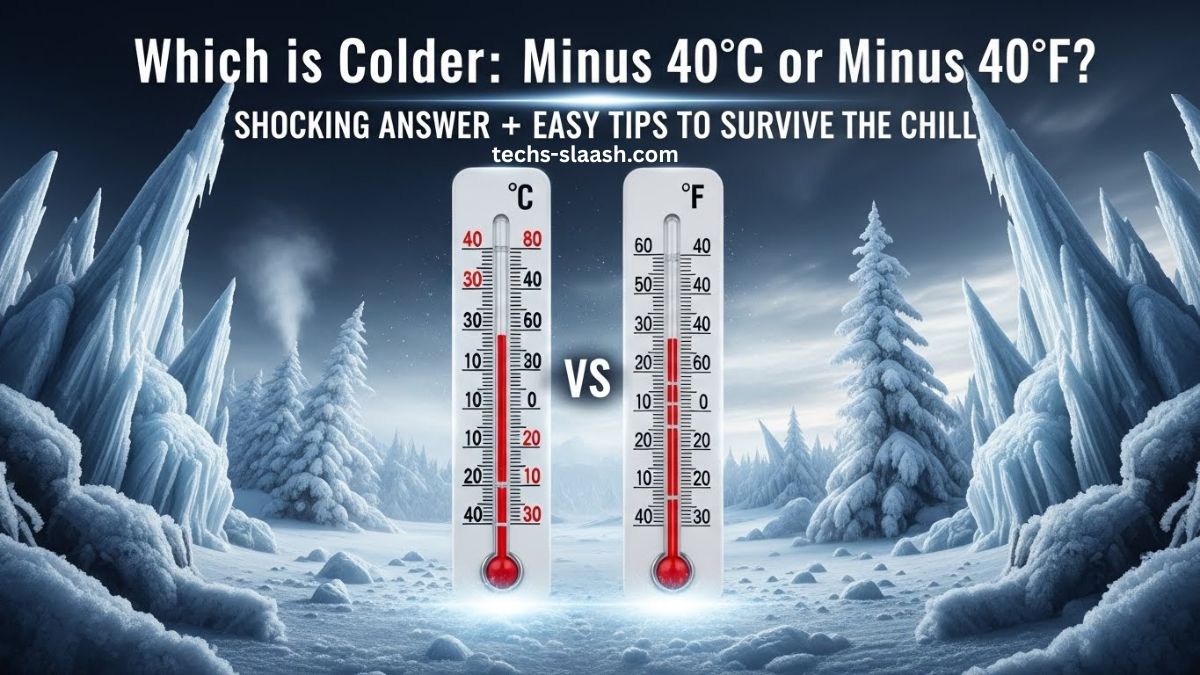
You might think one is way colder than the other. But let’s clear this up right now. Both -40°C and -40°F feel the same. They match up exactly at this point. No one is colder. I know, it sounds odd. Stick with me, and I’ll show you why. We’ll look at the scales, how to switch between them, and what this cold really means for you.
Understanding Celsius and Fahrenheit Basics
First, you need to know what these scales are. They measure heat in different ways. Most folks use one or the other based on where they live.
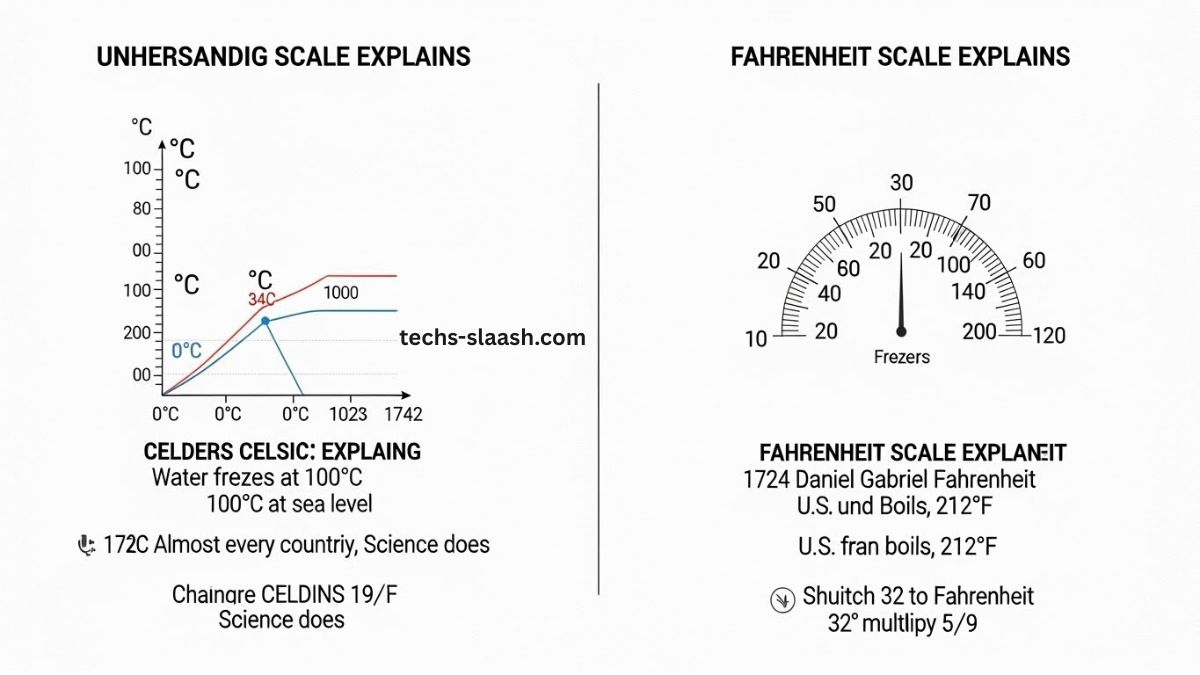
Celsius Scale Explained
Celsius started in 1742. A man named Anders Celsius made it. Water freezes at 0°C. It boils at 100°C at sea level. Almost every country uses Celsius. Science does too. To change Celsius to Fahrenheit, you multiply by 9/5 and add 32.
Fahrenheit Scale Explained
Fahrenheit came in 1724. Daniel Gabriel Fahrenheit created it. Water freezes at 32°F. It boils at 212°F. The U.S. and a few spots still use it. To switch Fahrenheit to Celsius, subtract 32 and multiply by 5/9.
These basics help you see why the scales differ. But at very cold temps, things get interesting.
The Direct Answer: Is -40°C Colder Than -40°F?
No. They are the same. -40°C equals -40°F. This is the one spot where both scales agree. You can check it with the formula. Take -40°C, times 9/5 is -72, plus 32 is -40°F. It matches.
Why People Get Confused
You often see bigger numbers in Fahrenheit for warm days. Like 70°F is about 21°C. So you think Fahrenheit always runs higher. But at cold ends, it flips. Most folks don’t deal with -40 often. Schools teach one scale more. That adds to the mix-up.
The Math That Makes -40 Special
Let’s see how this happens. Set the formulas equal. Say C = F. But use the change rules. So F = (C × 9/5) + 32. If C = F, then C = (C × 9/5) + 32. Subtract C from both sides: 0 = (C × 9/5) – C + 32. That’s 0 = C (9/5 – 1) + 32. 9/5 minus 1 is 4/5. So 0 = C (4/5) + 32. Then C (4/5) = -32. C = -32 × 5/4. That’s -40. Same for F. Cool, right? It’s the only match point.
Real-Life Temperature Benchmarks
You need examples to get it. Here’s a table with common points. It shows both scales side by side.
| Condition | Celsius (°C) | Fahrenheit (°F) |
|---|---|---|
| Water freezes | 0 | 32 |
| Nice room temp | 22 | 72 |
| Human body | 37 | 98.6 |
| Hot summer day | 35 | 95 |
| Water boils | 100 | 212 |
| Extreme cold (our spot) | -40 | -40 |
| Very cold winter | -20 | -4 |
| Mild cold | -5 | 23 |
See how -40 stands out? It’s the same on both. Places like Canada or Russia hit this in winter.
Easy Conversion Chart for Cold Temperatures
Need quick switches for cold temps? Here’s a better table than most. I added more rows for below -40 too.
| Celsius (°C) | Fahrenheit (°F) |
|---|---|
| -50 | -58 |
| -45 | -49 |
| -40 | -40 |
| -35 | -31 |
| -30 | -22 |
| -25 | -13 |
| -20 | -4 |
| -15 | 5 |
| -10 | 14 |
| -5 | 23 |
| 0 | 32 |
| -60 | -76 |
| -70 | -94 |
Use this when you plan a trip to cold spots. It helps you pack right.
What -40 Feels Like in Real Life
At -40, cold hits hard. Your breath turns to ice. Cars might not start. Metal feels sticky on skin. Wind makes it worse. But the feel is the same in C or F. You shiver just as much.
Where in the World You Might Experience It
Think Siberia in Russia. Or Yukon in Canada. Greenland too. In 2021, Sweden got to -43°C. Alaska sees it often. If you live there, you know. For others, it’s rare but real.
How Your Body Reacts to -40 Degrees
Your skin can freeze fast. In 1 to 2 minutes without cover. Eyes water and freeze. Breathing hurts. At lower temps, it’s worse.
Here’s a table of effects:
| Temperature (°C/°F) | Body Effect |
|---|---|
| -40 | Skin freezes in under 2 min, metal sticks to skin |
| -50 | Frostbite in 1 min, hard to breathe |
| -60 | Eyes may freeze shut, pain in lungs |
| -70 | Life threat in seconds without gear |
Stay inside if you can. Or bundle up.
Common Misconceptions About Temps
Many think Fahrenheit is always warmer. Not true. Below -40, Celsius numbers are bigger but still colder. Like -50°C is -58°F. -50 looks bigger than -58, but it’s colder. Another mix-up: Wind chill changes the scales the same way. It doesn’t favor one. And no, Kelvin isn’t for daily use. It’s for science, where -40°C is 233 K.
Survival Tips for -40 Weather
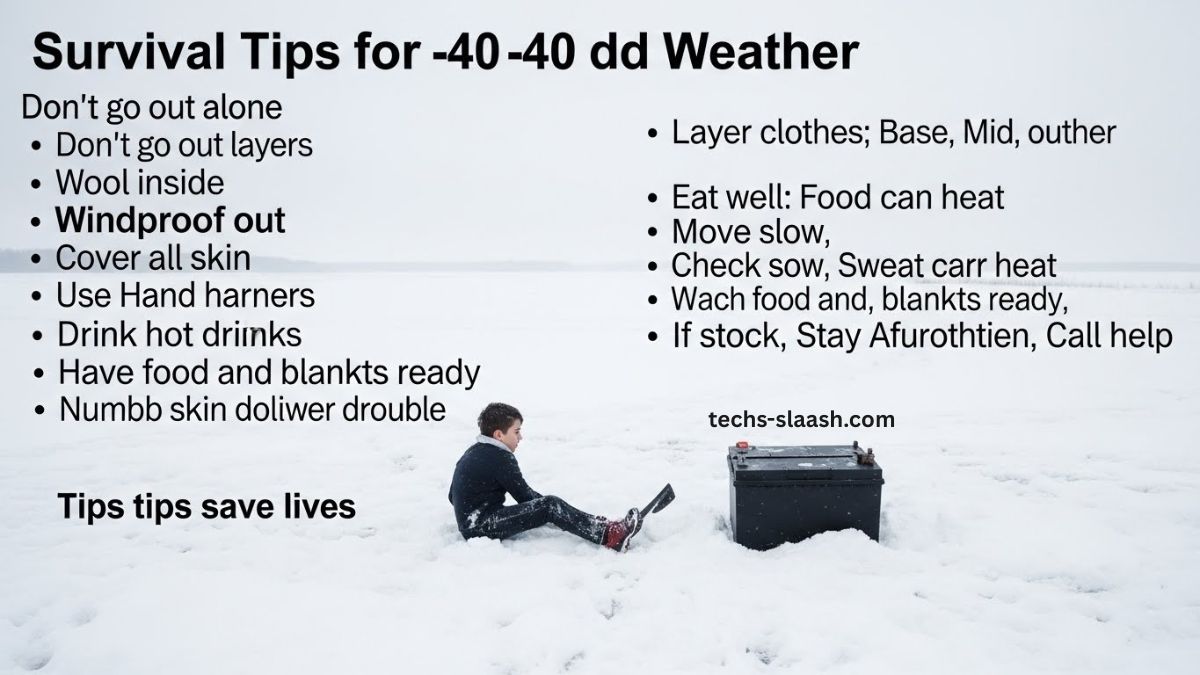
Don’t go out alone. Wear layers. Wool inside, windproof out. Cover all skin. Use hand warmers. Drink hot drinks. Check car battery. Have food and blankets ready. If stuck, stay in car. Call help. These tips save lives. I add them because knowing the temp isn’t enough. You need to act.
- Layer clothes: Base, mid, outer.
- Eat well: Food gives heat.
- Move slow: Sweat can freeze.
- Watch for frostbite: Numb skin means trouble.
Why We Still Use Two Scales: A Quick History
Fahrenheit came first in Germany. U.S. stuck with it. Celsius spread with metric system in 1800s. Canada switched in 1970s. U.K. too. But U.S. likes tradition. Cost to change is high. Roads, signs, all that. Science uses Celsius. One day, maybe all switch. But for now, we have both.
FAQs About Temperature Comparisons
You have questions. Here are answers. I added extras to help more.
Is -40°F colder than -40°C? No. They match exactly.
What’s the coldest temp ever? -89.2°C or -128.6°F in Antarctica, 1983.
How fast does skin freeze at -40? In 1 to 2 minutes on bare skin.
Why do countries use different scales? History and habit. U.S. keeps Fahrenheit. Others use Celsius.
Is -30°C colder than -30°F? Yes. -30°C is -22°F. So -30°F is colder.
How do I convert temps quick? For C to F: Double it, subtract 10%, add 32. Close enough.
What’s Kelvin? Absolute scale. 0 K is no heat. -40°C is 233 K.
Does wind chill change the equal point? No. Wind chill feels colder but scales stay the same.
Why is -40 the only match? From the math setup. Formulas cross there.
Can I use an app for conversions? Yes. Many free ones work great.
Wrapping It Up
You’ve probably heard the debate before: Which is colder: minus 40°c or minus 40°f? The answer is simple—they’re exactly the same temperature! This is the only point where Celsius and Fahrenheit match perfectly, creating one of the coolest (pun intended) facts in science.
Now you know the math behind it, how to convert temps quickly, what -40 really feels like on your skin, and even how to stay safe in extreme cold. Whether you’re planning a winter trip to Canada, curious about weather records, or just settling a friendly argument, you’ve got all the facts.
