


You might have seen the IP address 10.24.1.53 on your device or in a network setup. It’s a private IP. That means it’s not out on the open web. It’s for use inside local networks like your home or office. We will cover what it is, how it works, and why it matters. This guide gives you more details than basic lookup tools. Stick around to get clear answers.
Is 10.24.1.53 a Public or Private IP?
10.24.1.53 falls in the private IP range. Private IPs help devices talk to each other inside a network. They don’t connect straight to the internet. This setup keeps things safe and organized.
The rules come from RFC 1918. It sets aside blocks for private use:
- 10.0.0.0 to 10.255.255.255
- 172.16.0.0 to 172.31.255.255
- 192.168.0.0 to 192.168.255.255
10.24.1.53 sits in the first block. Your router might assign it to a phone, laptop, or printer.
Why We Call 10.24.1.53 a Bogon IP
Bogon means bogus or reserved. It’s a term for IPs not meant for public use. Lookup tools flag 10.24.1.53 as bogon because it’s private. No real location data shows up for it. That’s normal. Bogons include private ranges, loopback like 127.0.0.1, and link-local like 169.254.0.0/16.
If you try a public lookup, you get nothing. That’s because it’s not routed online. We see this with all private IPs.
Where You Might See 10.24.1.53 in Real Life
You could spot this IP in many spots. Here are common ones:
- Home networks: Your router gives it to devices.
- Office setups: For computers in a company LAN.
- Cloud testing: In virtual machines on AWS or Azure.
- Labs: Students use it to practice networking.
In big firms, admins pick subnets like 10.24.1.0/24 for departments. This IP might go to a server or workstation.
How to Set Up a Device with 10.24.1.53
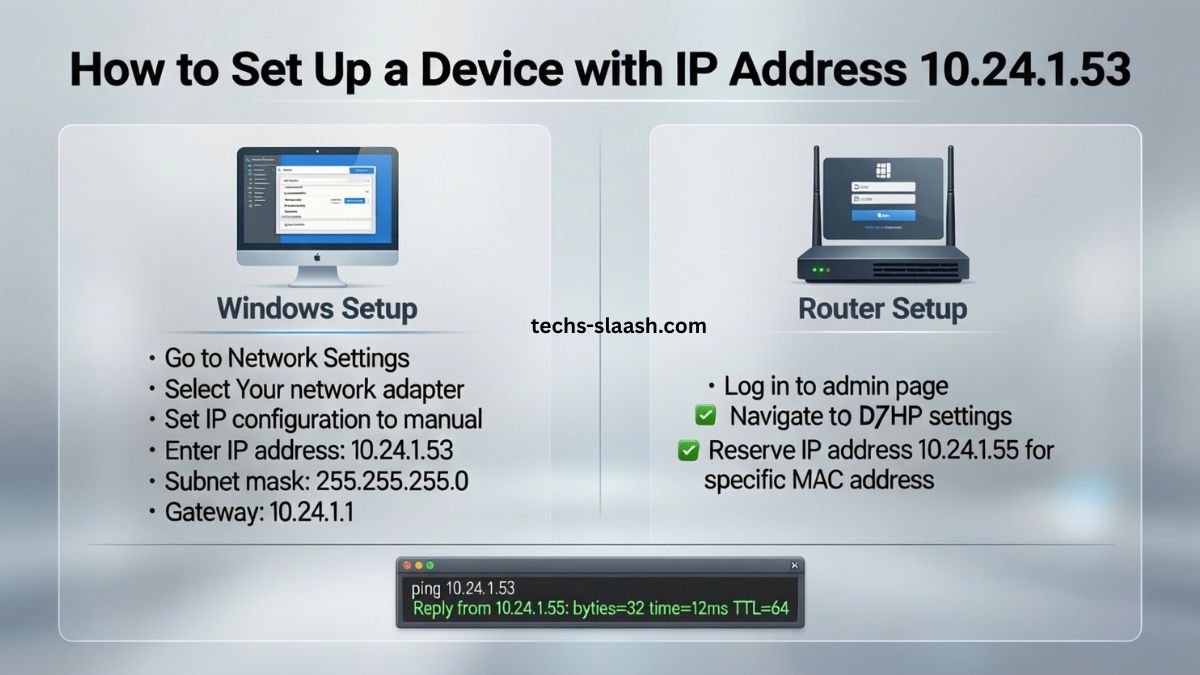
Want to assign this IP? It’s easy. Follow these steps for a basic setup.
On Windows:
- Go to Network Settings.
- Pick your adapter.
- Set IP to manual.
- Enter 10.24.1.53, subnet 255.255.255.0, gateway like 10.24.1.1.
On a router:
- Log in to admin page.
- Go to DHCP settings.
- Reserve 10.24.1.53 for a MAC address.
Test with ping to check if it works.
Tips to Fix Problems with 10.24.1.53
Issues pop up sometimes. Here’s how to fix them.
- No connection: Check cables. Restart router.
- IP conflict: Two devices have the same IP. Change one.
- Can’t reach gateway: Make sure subnet matches.
- Slow speed: Look for interference if on Wi-Fi.
Use tools like ipconfig on Windows or ifconfig on Linux to see your IP.
Read: Kolkata Fatafat Arcarrierpoint.net: Today Live Results Free Tips & Fast Updates 2026
Keep Your Network Safe with Private IPs Like 10.24.1.53
Private IPs add a layer of safety. They hide devices from the web. But you still need good habits.
- Use strong passwords on routers.
- Turn on firewall.
- Update firmware.
- Watch for odd traffic.
This stops outsiders from reaching your 10.24.1.53 devices.
Private IP Ranges at a Glance
Here’s a quick table of private IP blocks.
| Range | Total Addresses | Common Use |
|---|---|---|
| 10.0.0.0/8 | 16 million | Large networks |
| 172.16.0.0/12 | 1 million | Medium setups |
| 192.168.0.0/16 | 65,000 | Home routers |
10.24.1.53 fits in the big one for flexibility.
FAQs About 10.24.1.53
What does 10.24.1.53 mean?
It’s a private IPv4 address. Used in local networks, not the public internet.
Can I find the location of 10.24.1.53?
No. Private IPs have no public location. They stay inside your network.
Is 10.24.1.53 safe to use?
Yes, if your network is secure. It helps keep devices private.
How do I change my IP to 10.24.1.53?
Set it manually in device settings or reserve it in your router.
Why does my lookup say bogon for 10.24.1.53?
Bogon means reserved. It’s not for public use, so no data shows.
Can 10.24.1.53 connect to the internet?
Yes, through NAT on your router. The router uses a public IP outside.
What if I see 10.24.1.53 on my public IP check?
That shouldn’t happen. It means a config error. Check your setup.
Is 10.24.1.53 used by any big company?
It could be. Many firms use the 10 range for internal stuff.
Wrapping It Up
Take Control of Addresses Like 10.24.1.53 Private IPs such as 10.24.1.53 are the unsung heroes of every local network. They give your phones, laptops, printers, and smart devices a way to talk to each other without exposing them to the whole internet. You’ve now got the full picture: what it is, why it’s marked as bogon, real-world uses, simple setup steps, quick fixes, and even basic security tips. Next time you see 10.24.1.53 (or any 10.x.x.x address), you’ll smile — because you understand it completely. Bookmark this guide, share it with a friend who’s setting up their router, and keep your network clean and fast.
